Synonyms for Unease: Better Words for Worry, Anxiety, and Discomfort
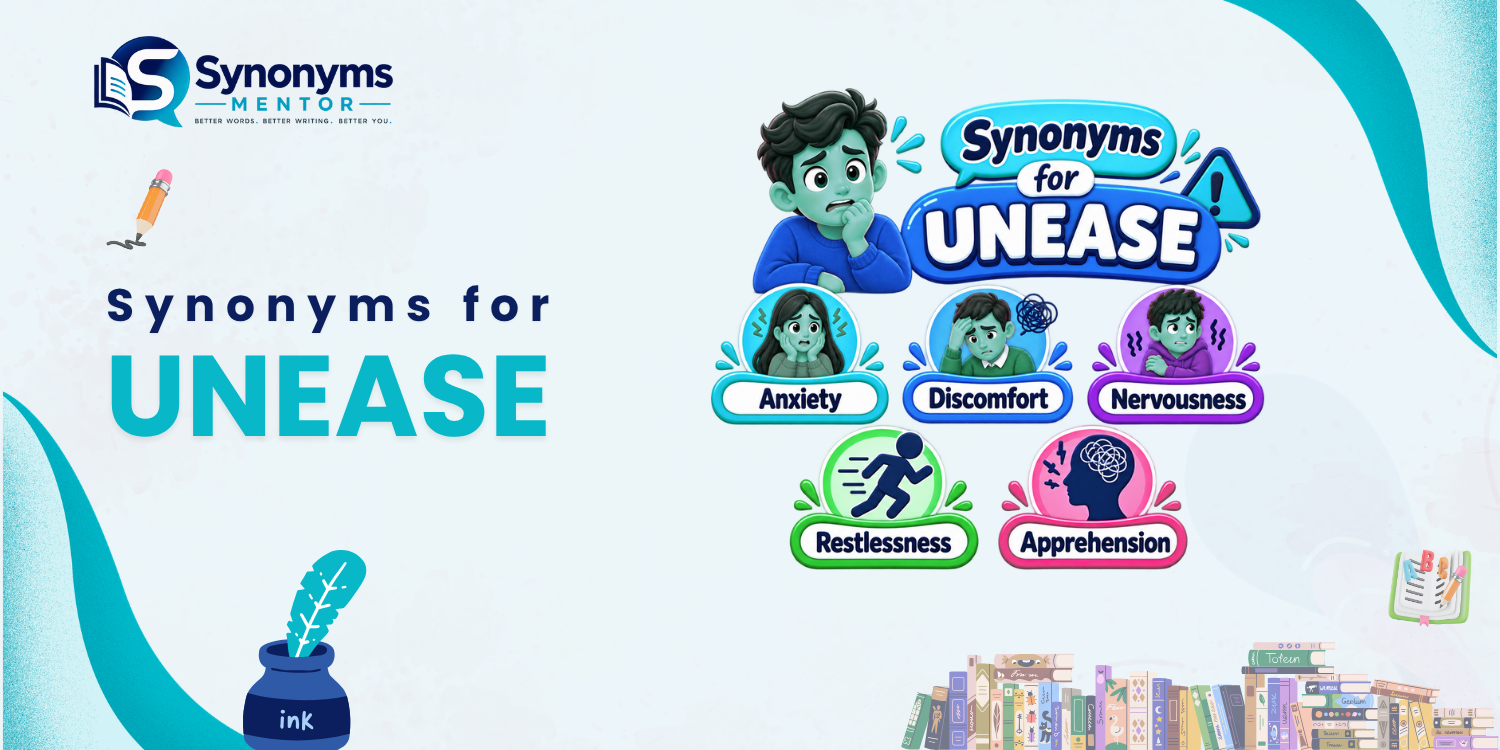
Looking for synonyms for unease can be surprisingly tricky because several related words describe uncomfortable or worried feelings without meaning exactly the same thing. Anxiety, apprehension, worry, concern, disquiet, nervousness, and misgiving can all overlap with unease, but each carries its own shade of meaning.
The best synonym therefore depends on why the person feels uncomfortable, how strong the feeling is, and whether the concern is specific or vague.
Quick Answer: What Are the Best Synonyms for Unease?
The closest synonyms for unease include uneasiness, anxiety, worry, apprehension, concern, disquiet, nervousness, misgiving, and tension. The best choice depends on context. Anxiety usually suggests stronger or more persistent worry, apprehension often involves concern about something that may happen, while disquiet emphasizes a disturbed or unsettled state of mind.
Core Synonyms for Unease
| Word | Relationship | Meaning | Strength | Best Context |
|---|---|---|---|---|
| Uneasiness | Very close synonym | A feeling of discomfort or worry | Similar | General use |
| Anxiety | Close synonym | Strong worry or nervous concern | Often stronger | Future problems, uncertainty |
| Worry | Close synonym | Concern about possible problems | Similar | Everyday situations |
| Apprehension | Near synonym | Nervous expectation that something may go wrong | Similar | Future events |
| Concern | Near synonym | Worry about a person, issue, or situation | Usually milder | Neutral and professional writing |
| Disquiet | Near synonym | A disturbed or unsettled state of mind | Similar | Formal or literary writing |
| Nervousness | Contextual alternative | A tense or anxious feeling | Similar | Social or performance situations |
| Misgiving | Contextual alternative | A doubt or concern about whether something is right | Similar | Decisions and judgments |
| Foreboding | Contextual alternative | A strong feeling that something bad may happen | Stronger | Anticipated trouble |
| Dread | Contextual alternative | Intense fear or anxiety about something expected | Stronger | Serious or unpleasant events |
| Discomfort | Contextual alternative | A feeling of physical or emotional lack of ease | Usually broader | Social or emotional situations |
| Tension | Contextual alternative | A state of mental or emotional strain | Different emphasis | Stressful situations |
The broadest core alternatives are uneasiness, anxiety, worry, apprehension, concern, and disquiet. Cambridge and Merriam-Webster both include several of these among their synonym sets.
What Does “Unease” Mean?
Unease is a noun referring to a feeling of worry, discomfort, or lack of confidence that something is right. It often describes an uncertain or vaguely troubling feeling rather than a clearly defined fear.
For example:
The strange silence created a sense of unease.
Here, the person may not know exactly what is wrong. They simply feel that something is not quite right.
Cambridge gives examples involving unease about, unease over, and unease with, showing that the noun commonly identifies the subject or situation causing concern.
Pronunciation
US: /ʌnˈiːz/
UK: /ʌnˈiːz/
The pronunciation is the same in both varieties of English.
The Most Useful Synonyms for Unease
1. Uneasiness
Meaning: A feeling of being uncomfortable, worried, or unsettled.
This is the closest straightforward alternative to unease. In many sentences, uneasiness can replace unease without significantly changing the meaning.
Example:
There was growing uneasiness among employees about the proposed changes.
Best for: General writing when you want almost the same meaning as unease.
2. Anxiety
Meaning: A stronger feeling of worry or nervousness, particularly about what might happen.
Anxiety often suggests more persistent or intense concern than unease. It is also a much broader word.
Example:
The uncertainty about the results caused considerable anxiety.
Choose “anxiety” when: the feeling is more substantial or focused on an uncertain future.
Merriam-Webster lists anxiety among the leading synonyms of unease.
3. Worry
Meaning: Concern about something that may cause difficulty or harm.
Worry is more common and conversational than unease. It often identifies a particular problem.
Example:
Her biggest worry was whether the project would be finished on time.
Choose “worry” when: you want a natural, everyday expression.
4. Apprehension
Meaning: An uneasy feeling about something that may happen.
Apprehension is especially useful when the concern is directed toward an anticipated event.
Example:
He approached the interview with some apprehension.
Choose “apprehension” when: someone is nervous about an upcoming situation.
It is generally more formal than worry.
5. Concern
Meaning: A feeling of worry about a particular issue or situation.
Concern is often milder and more neutral than anxiety. It is especially useful in professional, academic, and public communication.
Example:
Residents expressed concern about the proposed construction.
Choose “concern” when: you want restrained, neutral language.
6. Disquiet
Meaning: A feeling of anxiety or disturbance that prevents someone from feeling calm.
Disquiet is a particularly useful alternative when you want to emphasize that someone feels unsettled or disturbed.
Example:
The sudden policy change caused considerable disquiet among investors.
Choose “disquiet” when: you want a formal or literary alternative that emphasizes an unsettled state of mind.
Cambridge includes disquiet and disquietude among words associated with unease.
7. Nervousness
Meaning: A tense or anxious feeling, often caused by uncertainty or pressure.
Unlike unease, nervousness frequently describes a person’s physical or emotional reaction to a specific situation, such as public speaking or an important meeting.
Example:
Her nervousness was obvious before the presentation.
Choose “nervousness” when: the unease is connected to pressure, performance, or social interaction.
8. Misgiving
Meaning: A feeling of doubt or concern about whether something is right or wise.
Misgiving is especially useful when someone has doubts about a decision.
Example:
She had some misgivings about accepting the offer.
Choose “misgiving” when: your unease comes from doubts about a choice, plan, or judgment.
9. Foreboding
Meaning: A strong feeling that something bad may happen.
This is more specific than unease. The person experiencing foreboding usually has a sense that an unpleasant event is approaching.
Example:
The empty streets gave him a strange sense of foreboding.
Choose “foreboding” when: the unease involves an expectation of future trouble.
10. Dread
Meaning: Intense fear or anxiety about something expected or anticipated.
Dread is considerably stronger than ordinary unease.
Example:
She felt a sense of dread before hearing the final decision.
Choose “dread” when: the feeling is intense rather than mild or vague.
Which Word Should I Use?
The easiest way to choose is to identify the source and intensity of the feeling.
Choose unease when:
You want to describe a vague feeling that something is wrong or uncomfortable.
The strange behavior left me with a sense of unease.
Choose anxiety when:
The worry is stronger or more persistent.
The uncertainty caused considerable anxiety.
Choose worry when:
You want ordinary, everyday language.
Her main worry was the cost.
Choose apprehension when:
Someone is nervous about something that may happen.
He felt apprehension before the examination.
Choose concern when:
You want neutral or professional wording.
The committee expressed concern about the proposal.
Choose disquiet when:
You want to emphasize an unsettled state of mind, especially in formal writing.
The announcement caused widespread disquiet.
Choose foreboding when:
The feeling suggests that something bad is coming.
A sense of foreboding filled the room.
Choose dread when:
The feeling is intense.
She felt dread at the thought of returning.
Unease vs. Anxiety
Unease and anxiety overlap, but they are not always interchangeable.
| Unease | Anxiety |
|---|---|
| Often vague | Often more pronounced |
| Can be mild | Can be stronger or persistent |
| Something feels wrong | Worry may focus on possible outcomes |
| Often emphasizes discomfort | Often emphasizes worry or nervousness |
Example:
I felt a slight sense of unease when I entered the unfamiliar building.
This sounds natural because the feeling is vague and relatively mild.
I felt intense anxiety about the upcoming exam.
Here, anxiety better communicates the stronger worry.
Unease vs. Apprehension
Both words can describe concern about something that may happen.
The distinction is mainly one of focus.
Unease can be vague:
The unusual silence filled her with unease.
Apprehension more clearly points toward an anticipated situation:
He entered the meeting with apprehension.
Use apprehension when the future event is central to the feeling.
Unease vs. Worry
Worry is usually more direct and conversational.
I felt uneasy about the decision.
I was worried about the decision.
Both are natural, but the second sentence sounds more everyday.
Unease can also suggest that something simply doesn’t feel right, even when the person cannot identify a specific worry.
Unease vs. Concern
Concern is often more neutral and measured.
The residents expressed concern about traffic.
The residents expressed unease about traffic.
The first sounds like a straightforward statement of a problem. The second emphasizes a broader feeling of discomfort or uncertainty.
This makes concern especially useful in professional and formal communication.
Unease vs. Discomfort
These words overlap, but discomfort is broader.
Discomfort can be:
- physical
- social
- emotional
For example:
The chair caused physical discomfort.
But:
The strange conversation created a sense of unease.
Unease is more closely associated with an unsettled or worried mental state.
Natural Collocations With “Unease”
Some common combinations are especially useful for writers:
- a sense of unease
- a feeling of unease
- growing unease
- increasing unease
- widespread unease
- deep unease
- considerable unease
- public unease
- unease about something
- unease over something
- unease with something
Cambridge specifically documents patterns such as unease about, unease over, and unease with.
Examples
The announcement created growing unease among residents.
She couldn’t explain the sense of unease she felt.
There was widespread public unease about the proposal.
Employees expressed unease about the sudden changes.
Common Mistakes When Choosing a Synonym for Unease
1. Treating every emotion word as an exact synonym
Words such as panic, dread, and fear can overlap with unease, but they usually describe stronger emotions.
2. Using “discomfort” when worry is central
Discomfort is broader and can refer to physical discomfort. If the issue is specifically worry, unease, concern, or anxiety may be more precise.
3. Using “foreboding” for ordinary nervousness
Foreboding specifically suggests that something bad may happen. It is stronger and more predictive than ordinary unease.
4. Using “misgiving” for every uncomfortable feeling
A misgiving normally involves doubt about whether something is right, wise, or appropriate. It is particularly useful for decisions and judgments.
5. Assuming “anxiety” always means exactly the same thing
Anxiety overlaps strongly with unease, but it can describe a more intense or persistent form of worry. Merriam-Webster and Cambridge both distinguish the broader semantic territory surrounding these words.
Related Words
These words are associated with the same semantic field but should not automatically be treated as exact synonyms:
- fear — expectation or awareness of danger
- alarm — sudden awareness of danger or trouble
- stress — mental or emotional strain
- agitation — a disturbed or restless state
- distress — significant emotional suffering or difficulty
- suspense — uncertainty about what will happen
- uncertainty — lack of confidence about what is true or what will happen
This distinction matters because thesaurus lists often contain words that overlap with a target concept without being interchangeable in every sentence. Cambridge’s thesaurus, for example, places many of these words within broader semantic groupings connected to unease.
Antonyms of Unease
The opposite of unease is generally a state of calm, confidence, comfort, or reassurance.
Useful antonyms include:
- ease
- calmness
- confidence
- composure
- assurance
- relief
- serenity
- tranquility
- comfort
Cambridge lists words such as relief, assurance, confidence, calmness, tranquility, and serenity among antonyms associated with unease.
Frequently Asked Questions
What is the closest synonym for unease?
Uneasiness is probably the closest direct synonym because it preserves almost the same meaning and grammatical function. Depending on context, anxiety, worry, apprehension, concern, and disquiet can also work, but each emphasizes a slightly different aspect of the feeling.
What is a stronger word for unease?
Depending on the context, dread, fear, alarm, or anxiety can be stronger than ordinary unease. Dread is particularly strong because it suggests intense fear or anxiety about something expected.
What is a formal synonym for unease?
Disquiet is a useful formal synonym. Apprehension and misgiving can also work well in formal writing, depending on the intended meaning. Concern is another strong choice when you want professional and neutral language.
Is anxiety the same as unease?
Not exactly. Anxiety and unease overlap considerably, but anxiety often suggests stronger or more sustained worry. Unease can describe a vague feeling that something is wrong without a clearly identified source.
What is another word for a sense of unease?
Depending on the context, you could say a feeling of apprehension, a sense of anxiety, a feeling of discomfort, a sense of foreboding, or a feeling of disquiet. The best choice depends on whether the feeling is vague, future-focused, intense, or simply unsettling.
What is the difference between unease and apprehension?
Unease can be a general feeling that something is wrong or uncomfortable. Apprehension usually has a stronger connection to anticipation—feeling nervous or concerned about something that may happen.
What is the difference between unease and worry?
Worry is generally more direct and everyday, often involving a specific problem. Unease can be vaguer and may describe the feeling that something is not right even when the source of concern is unclear.
Conclusion
The best synonym for unease depends on the exact feeling you want to describe. Uneasiness is the closest direct alternative, while anxiety suggests stronger worry, worry sounds more conversational, apprehension focuses on anticipated events, concern works well in neutral or professional contexts, and disquiet emphasizes an unsettled state of mind.

Olivia Brown is a vocabulary expert and content writer who focuses on synonyms, antonyms, and word usage. She helps learners understand English words in a simple and practical way, making communication clearer and more effective