Synonyms for Ruckus: 15 Better Words With Examples
Looking for synonyms for ruckus? The word ruckus describes a noisy, disorderly situation or argument, and it is mainly used in informal American English.
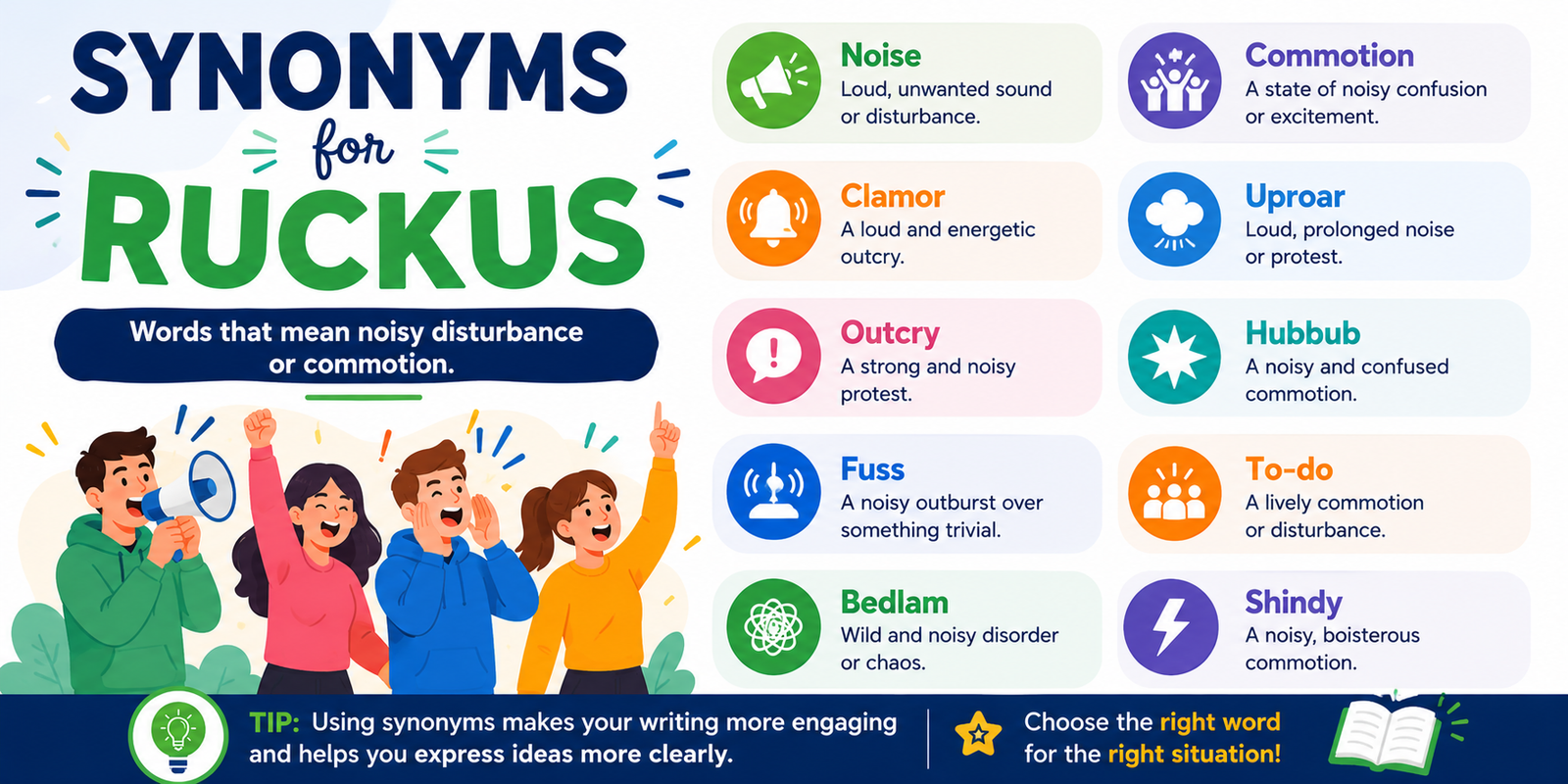
Several words can replace ruckus, but they are not interchangeable in every situation. Commotion is a strong general alternative, while rumpus keeps an informal tone. Uproar emphasizes loud public reaction, din focuses on continuous unpleasant noise, and tumult is a more formal choice for disorder or confusion.
The best synonym depends on what kind of disturbance you mean.
Quick Answer
The closest synonyms for ruckus include commotion, rumpus, uproar, disturbance, tumult, din, hubbub, and brouhaha. However, each has a slightly different emphasis. Use commotion for general noisy confusion, uproar for a loud reaction or protest, din for persistent noise, and tumult for more formal descriptions of disorder.
15 Synonyms for Ruckus
| Word | Relationship | Meaning | Formality | Best Context |
|---|---|---|---|---|
| Commotion | Direct/near synonym | Noise, confusion, or excited movement | Neutral | General disturbances |
| Rumpus | Direct synonym | Noisy disturbance or argument | Informal | Casual writing and speech |
| Uproar | Near synonym | Loud public reaction or disturbance | Neutral | Protests, controversy, reactions |
| Disturbance | Near synonym | Something that interrupts peace or order | Neutral/Formal | Official or professional contexts |
| Din | Contextual alternative | A prolonged, unpleasant loud noise | Neutral | Crowds, traffic, machinery |
| Hubbub | Near synonym | Busy, confused noise and activity | Informal | Crowds and busy places |
| Tumult | Near synonym | Violent or confused disorder | Formal/Literary | Serious or dramatic situations |
| Brouhaha | Near synonym | Excited reaction or noisy fuss | Informal | Controversy or exaggerated fuss |
| Hullabaloo | Near synonym | Noisy excitement or fuss | Informal | Playful or expressive writing |
| To-do | Contextual alternative | A fuss or disturbance | Informal | Minor incidents |
| Mayhem | Contextual alternative | Severe disorder or chaos | Neutral | Highly chaotic situations |
| Pandemonium | Contextual alternative | Extreme confusion and disorder | Neutral | Large-scale chaos |
| Chaos | Related/near synonym | Complete lack of order | Neutral | Disorganized situations |
| Altercation | Contextual alternative | A verbal or physical argument | Neutral | Conflicts between people |
| Clamor | Contextual alternative | Loud, persistent noise or demands | Neutral/Formal | Public demands or noisy crowds |
Cambridge specifically identifies commotion, din, and informal rumpus as synonyms of ruckus, while tumult also appears in its broader synonym material.
What Does “Ruckus” Mean?
Ruckus is a noun meaning a noisy situation or argument. It is mainly informal and is particularly associated with American English. Its pronunciation is /ˈrʌk.əs/.
For example:
The students caused a ruckus in the hallway.
The sentence suggests that the students created noticeable noise or disorder. It does not necessarily mean serious violence or complete chaos.
That distinction matters when choosing a synonym.
The Closest Synonyms for Ruckus
1. Commotion
Commotion is probably the most versatile alternative to ruckus. It describes a short period of noise, confusion, or excited movement.
Example:
The unexpected announcement caused a commotion in the auditorium.
Choose it when: you want a neutral, broadly useful word.
2. Rumpus
Rumpus is very close to ruckus in meaning and tone. It describes a noisy disturbance or argument and is informal.
Example:
The children caused a rumpus in the living room.
Choose it when: you want a casual, lively alternative.
Ruckus vs. rumpus:
These two can often substitute for each other. Rumpus can sound slightly more playful or old-fashioned.
3. Uproar
Uproar describes a state of loud excitement, protest, or public reaction.
Example:
The controversial decision caused an uproar among local residents.
Choose it when: people are reacting loudly to something.
Key difference: Ruckus can simply be a noisy disturbance; uproar often suggests a strong reaction or protest.
4. Disturbance
Disturbance is more neutral and formal than ruckus. It refers broadly to something that interrupts peace, quiet, or normal order.
Example:
Security was called after a disturbance broke out near the entrance.
Choose it when: writing formally or describing an incident in an official context.
5. Din
Din focuses specifically on loud, unpleasant, or continuous noise.
Example:
The din from the construction site made it difficult to concentrate.
Choose it when: the noise itself matters more than the argument or disorder.
A din is therefore not always a direct replacement for ruckus.
More Contextual Alternatives
Hubbub
Hubbub refers to noisy activity, especially when many people are talking or moving around.
Example:
The hubbub of the crowded market continued throughout the afternoon.
It works especially well for busy public places.
Tumult
Tumult is more formal and literary. It suggests confusion, disorder, or a highly agitated situation.
Example:
The city descended into tumult after the announcement.
It is usually too formal for casual conversation where ruckus would sound natural.
Brouhaha
Brouhaha describes a noisy or excited reaction, often involving unnecessary fuss or controversy.
Example:
The minor rule change created a political brouhaha.
It has a noticeably informal and sometimes humorous tone.
Hullabaloo
Hullabaloo means noisy excitement, confusion, or fuss.
Example:
There was a great hullabaloo outside the theater.
It is expressive and informal, making it more suitable for conversational or playful writing than formal reports.
To-do
To-do can mean a fuss or disturbance, especially a relatively minor one.
Example:
They made quite a to-do over a simple misunderstanding.
It is informal and often implies that the reaction was larger than the situation deserved.
Stronger Words for Serious Disorder
Not every noisy situation is a ruckus. If the situation involves much greater disorder, another word may be more accurate.
Mayhem
Mayhem suggests severe disorder, confusion, or destructive activity.
Example:
The sudden evacuation created mayhem outside the building.
Use mayhem when the situation is significantly more chaotic than an ordinary ruckus.
Pandemonium
Pandemonium describes extreme confusion, noise, and disorder.
Example:
Pandemonium broke out when the final announcement was made.
It is stronger and more dramatic than ruckus.
Chaos
Chaos means a complete lack of order or organization.
Example:
The unexpected cancellation left the station in chaos.
Unlike ruckus, chaos does not necessarily involve noise.
Words for a Ruckus Involving an Argument
Sometimes ruckus specifically refers to people arguing.
Altercation
Altercation means a heated disagreement or argument, particularly between two or more people.
Example:
The two customers were removed after an altercation.
Choose altercation when the conflict between people matters more than the noise.
Clamor
Clamor refers to loud, persistent noise, especially when people are demanding something or expressing strong opinions.
Example:
There was growing clamor for changes to the policy.
It can therefore work when a noisy public reaction involves repeated demands.
Which Word Should You Use?
Choose commotion when:
You need the safest general synonym for a noisy, confused situation.
Choose rumpus when:
You want an informal and lively alternative to ruckus.
Choose uproar when:
People are reacting loudly to an event, decision, or controversy.
Choose disturbance when:
You need a neutral or more formal term.
Choose din when:
The main issue is persistent unpleasant noise.
Choose tumult when:
You want a formal or literary description of serious disorder.
Choose mayhem when:
The situation is highly chaotic or disruptive.
Choose altercation when:
The disturbance specifically involves an argument between people.
Ruckus vs. Commotion
These words are very close, but their tone differs.
| Ruckus | Commotion |
|---|---|
| Mainly informal | Neutral |
| Often American English | Broadly standard |
| Can suggest an argument | Can simply mean noise and confusion |
| More conversational | More suitable for formal writing |
Example:
- Informal: The kids caused a ruckus.
- Neutral: The kids caused a commotion.
For professional or academic writing, commotion is usually the better choice.
Ruckus vs. Uproar
The difference is mainly about reaction.
A ruckus is a noisy disturbance or argument.
An uproar often describes a loud reaction from a group of people.
Ruckus:
The neighbors complained about the ruckus upstairs.
Uproar:
The decision caused an uproar among employees.
Both can involve noise, but uproar is especially useful for public disagreement or strong reactions.
Ruckus vs. Tumult
Ruckus is informal and relatively everyday.
Tumult is more formal and can imply greater disorder or agitation.
Ruckus:
The children made a ruckus during lunch.
Tumult:
The country experienced political tumult after the announcement.
Using tumult for an ordinary noisy classroom would sound unnecessarily dramatic.
Common Mistakes
Mistake 1: Treating every noise word as an exact synonym
Words such as din emphasize noise, while chaos emphasizes lack of order. Neither is identical to ruckus in every context.
Mistake 2: Using “mayhem” for every small disturbance
Mayhem is stronger. It suggests serious disorder, so it can exaggerate a minor incident.
Mistake 3: Using “altercation” for any noisy situation
An altercation specifically involves a disagreement or confrontation. A noisy crowd is not necessarily an altercation.
Mistake 4: Using “ruckus” in highly formal writing
Because ruckus is mainly informal, disturbance, commotion, or another neutral term may be more appropriate in formal reports.
Antonyms of Ruckus
The opposite of a ruckus is a state of quiet, calm, or order.
Useful antonyms include:
- calm
- quiet
- peace
- tranquility
- order
- silence
The best antonym depends on what aspect of ruckus you want to contrast.
Noise, silence, or quiet works best.
For disorder, order is more precise.
For conflict or agitation, calm or peace may be better.
Frequently Asked Questions
What is the closest synonym for ruckus?
Commotion is one of the closest general synonyms for ruckus. Rumpus is also very close, particularly in informal English. Cambridge lists commotion, din, and rumpus among the synonyms associated with ruckus.
What is a formal word for ruckus?
Disturbance is a useful neutral-to-formal alternative. Tumult can also work when the situation involves significant disorder or agitation, although it has a more literary tone.
Is “commotion” the same as “ruckus”?
Not exactly. Both describe noisy or disorderly situations, but ruckus is mainly informal, while commotion is more neutral. Commotion can also emphasize confused movement or excitement rather than an argument.
What is a synonym for a loud argument?
Depending on the context, ruckus, uproar, altercation, or disturbance may work. Altercation is the most specific when the focus is on a disagreement between people.
Is “uproar” stronger than “ruckus”?
Not necessarily in every situation, but uproar often suggests a strong public reaction, protest, or widespread excitement. Ruckus is broader and more conversational.
What is the difference between ruckus and chaos?
A ruckus usually involves noise, disturbance, or argument. Chaos focuses on a complete lack of order and does not necessarily involve noise.
Is “rumpus” an informal synonym for ruckus?
Yes. Rumpus is a close informal alternative and can often replace ruckus in casual contexts.
Conclusion
The best synonym for ruckus depends on what you want to emphasize. Commotion is the safest general alternative, rumpus preserves the informal tone, uproar highlights a strong reaction, disturbance works well in formal contexts, and din focuses specifically on loud noise. For more serious disorder, mayhem, pandemonium, or tumult may be more accurate.

James Anderson is an English teacher and language researcher who creates easy synonym guides and vocabulary lessons. His goal is to help students and writers improve their language skills through simple and clear explanations.